B1DC5 Fault Code Fix
The message on the dashboard was there every time: “EV mode temporarily unavailable.”
Mr R could see it every time the vehicle was started, and the symptoms backed it up. The petrol engine ran from start-up without stopping. EV mode was completely unresponsive. Fuel was being used on every journey, no matter how short.
The electric driving that makes a plug-in hybrid worthwhile had simply stopped being available.
That was the problem Mr R was facing with his 2020 Range Rover Evoque PHEV. The vehicle wasn’t switching to EV mode and he didn’t understand why.
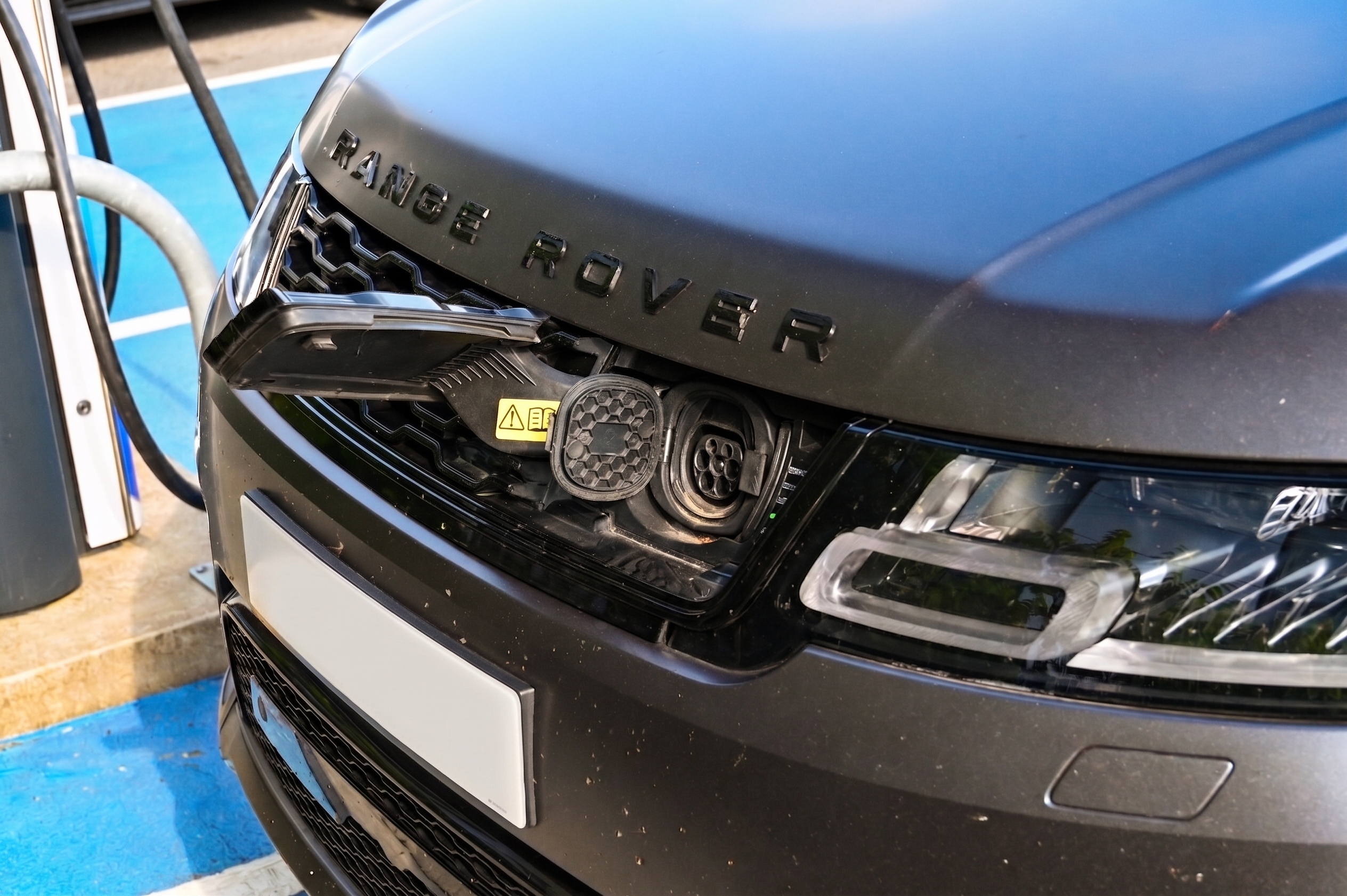
The fault prevented the Range Rover Evoque PHEV from operating in EV mode, forcing the petrol engine to remain running
He got in touch with South Coast Garage in Eastbourne to get the issue looked into. We scheduled the vehicle in at the earliest opportunity.
If your Range Rover PHEV won’t switch to EV mode, a number of faults could be responsible. A Range Rover EV mode fault requires thorough testing to identify the correct cause. If this is something you’re experiencing, contact South Coast Garage in Eastbourne and our technicians will help get to the bottom of it.
South Coast Garage’s First Look at the Range Rover EV Mode Fault
Mr R’s Range Rover Evoque PHEV was dropped off at South Coast Garage, Eastbourne, and our technicians spoke with him to understand how the fault had been presenting. The “EV mode temporarily unavailable” message was on the dashboard display at all times, the petrol engine ran from the moment the vehicle was started, and there was no way to select EV mode.
After the symptoms were confirmed, our technicians connected dealer-level diagnostic equipment to the vehicle and performed a full system scan. One stored fault code was present:
- B1DC5 High-voltage Coolant Heater #1, no operation.
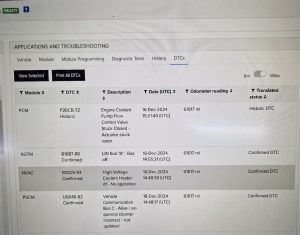
The initial diagnostic scan identified B1DC5-93, indicating no operation from the high-voltage coolant heater
Our technicians checked the serial data at the same time to understand how the vehicle’s systems were performing in relation to the stored fault code.
The fault code pointed to the high-voltage coolant heater, but it was not yet clear whether the heater unit itself had failed, whether a wiring or connection issue was responsible, or whether the fault existed elsewhere in the circuit. Thorough PHEV hybrid system diagnostics were required to find the root cause.
Pinpointing the Cause of the B1DC5 Fault Code on the Range Rover Evoque PHEV
The initial scan gave our technicians a clear starting point, and they worked through the fault step by step. A confirmed root cause was essential before the correct B1DC5 fault code fix could be carried out, so each possible cause was tested in turn.
Step 1: Consulting manufacturer technical information
To understand the B1DC5 fault code in the context of the Range Rover Evoque PHEV, our technicians accessed the manufacturer’s technical information service.
On a plug-in hybrid, the high-voltage coolant heater has an important role within the thermal management system. It draws energy from the high-voltage battery to heat coolant, allowing the cabin to be heated without the petrol engine running. If this component fails, electric cabin heating is lost entirely. In response, the system may force the petrol engine to run for cabin heat, and EV mode becomes unavailable.
This helped our technicians understand why a heater fault could take away the vehicle’s ability to run in electric mode. It also confirmed that the high-voltage coolant heater and the circuit around it were the right area to investigate.
Step 2: Checking for technical service bulletins
Our technicians searched the manufacturer’s database for any technical service bulletins or known faults connected to the B1DC5 fault code on this model.
Manufacturer information confirmed that high-voltage coolant heater failure had been recorded on the Evoque PHEV. This was not a replacement for testing, but it added helpful context and supported the direction of the investigation.
Step 3: Visual inspection and electrical checks
Our technicians inspected the high-voltage coolant heater and its surroundings visually for any signs of damage, corrosion, or disturbance. At the same time, the wiring and connectors linked to the heater were tested electrically.
- No external problems were found. The wiring and connectors were intact, with no signs of damage or contamination.
Step 4: Active testing of the high-voltage coolant heater
Dealer-level diagnostic equipment was used to carry out active testing, activating the high-voltage coolant heater directly to monitor its response.
Because this work involves the vehicle’s high-voltage electrical system, it was handled by HV-trained technicians equipped with insulated tooling and the appropriate safety equipment.
- The heater failed to respond when activated directly. Our technicians confirmed the unit had failed.
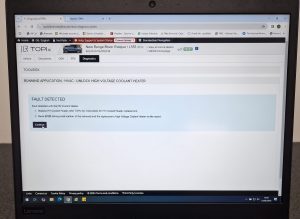
Manufacturer diagnostic testing confirmed a fault with the high-voltage coolant heater and directed replacement of the unit
Step 5: Circuit verification and wiring checks
To confirm that the failure was within the heater unit and not elsewhere in the circuit, our technicians completed circuit verification and wiring checks between the control module and the high-voltage coolant heater.
- The circuit was operating within expected parameters, with the wiring and connections found to be sound.
The conclusion
From the fault code through to active testing, every check pointed to the same root cause. The high-voltage coolant heater was non-responsive, and our technicians identified it as the failed component. This is a known failure on the Evoque PHEV, and the results confirmed Mr R’s vehicle had been affected. With the heater out of action, electric cabin heating was no longer possible. The system relied on the petrol engine for heat, keeping it running continuously and locking EV mode out. That was what was behind the Range Rover EV mode fault Mr R had been experiencing.
Replacing the high-voltage coolant heater was the confirmed next step in completing the B1DC5 fault code fix.
Installing a New High-Voltage Coolant Heater
Once testing was complete and the root cause confirmed, our technicians contacted Mr R to explain what had been found. We went through the test results, confirmed why wiring and connections were not the issue, and explained the need for a new high-voltage coolant heater. Mr R approved the repair, and work began straight away.
High-voltage safety procedures
- The vehicle’s high-voltage system was isolated and made safe before the repair started, with manufacturer procedures followed throughout. The work was completed by an HV-trained technician with insulated tooling and dedicated safety equipment.
Component replacement
- Our technicians disconnected the heater from the high-voltage system and removed it from the coolant circuit.
- The replacement unit was fitted and all electrical connections, mounting points, and seals were checked to make sure the installation was correct.
- After refilling the coolant circuit, the system was tested to confirm correct operation.
Post-repair verification
- All fault codes were cleared from the control module.
- The new heater’s operation was confirmed using dealer-level diagnostic software.
- The vehicle was run and monitored to verify EV mode had returned and the petrol engine was no longer running continuously.
- A full scan of all systems after the repair showed no fault codes were present.
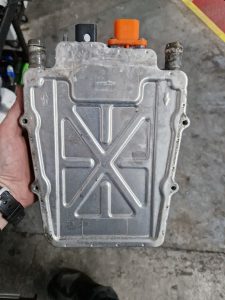
The failed high-voltage coolant heater removed from the Range Rover Evoque PHEV before the replacement unit was fitted
How the B1DC5 Fault Code Fix Made the Difference for Mr R
With the repair complete, Mr R’s Range Rover Evoque PHEV left South Coast Garage with EV mode restored. The petrol engine had stopped running unnecessarily, the “EV mode temporarily unavailable” message had gone from the dashboard, and the vehicle was once again performing as a plug-in hybrid should.
For Mr R, the repair delivered exactly what was needed. The investigation identified the root cause, the failed high-voltage coolant heater was replaced, and the vehicle returned to full hybrid operation in one visit. Clear and honest communication throughout the process kept him confident in every step of the work.
The advantages of using South Coast Garage were clear: a quicker turnaround than a main dealer, a competitive repair cost, and the assurance that the work was handled by HV-trained technicians with the specialist equipment and safety procedures that hybrid vehicle work requires.
Range Rover EV Mode Fault? Talk to the Team at South Coast Garage
Losing EV mode on a plug-in hybrid changes the ownership experience. Fuel costs go up, electric range vanishes, and the vehicle is no longer performing the way it was designed to. A professional hybrid car EV repair can get things working as they should.
If your Range Rover PHEV won’t enter EV mode, or the petrol engine is running when it shouldn’t be, getting the system thoroughly assessed is the right step. At South Coast Garage in Eastbourne, our technicians have the experience and equipment to carry out a Range Rover EV repair with the precision and care it requires. We’ll look into the fault, talk you through what we find, and give you a straightforward recommendation before any work begins.
Call South Coast Garage on 01323 734473 to discuss the issue or arrange a booking. Give us a call any time.
Why Choose South Coast Garage?
- HV-Trained Technicians: Our team includes technicians trained to work safely on high-voltage systems, with the insulated tooling and safety equipment that hybrid and electric vehicle work demands. Not every garage can offer this.
- Honest Communication: We’ll explain our findings clearly and let you make the decision on how to proceed.
- Evidence-Led Diagnosis: Every repair is built on a structured technical evaluation that confirms the root cause before any parts are changed.
- Dealer-Level Equipment: We use manufacturer diagnostic software and dealer-level equipment for thorough technical evaluations.
- Courtesy Car: A free courtesy car is available to keep you on the road while your vehicle is with us.
- Guaranteed: All work is protected by our 12-month parts and labour guarantee.
South Coast Garage is rated {{average-rating}} stars by {{review-count}} customers on Google. Have a look at their reviews.