How Does Car Suspension Work?
You’re driving along the coast road near Eastbourne when your front wheel finds a pothole. A hollow thud comes from beneath the car, something unfamiliar.
You keep going, hoping it was a one-off.
Then you drive over a speed bump at the next turning, and the same clunking sound returns…
It’s one of those sounds that sits in the back of your mind, leaving you wondering what it could be.
That noise is worth paying attention to.
It can be a sign that one of the suspension components beneath your car has started to wear, and because suspension wear develops gradually, over weeks and months, most drivers adjust to how the car feels without noticing how far things have drifted.
A knocking sound when you drive over bumps, steering that doesn’t feel as sharp as it used to, or your car pulling to one side; these are signs that something underneath your car needs attention. By the time the change becomes noticeable, the wear has usually been building for longer than you’d think.
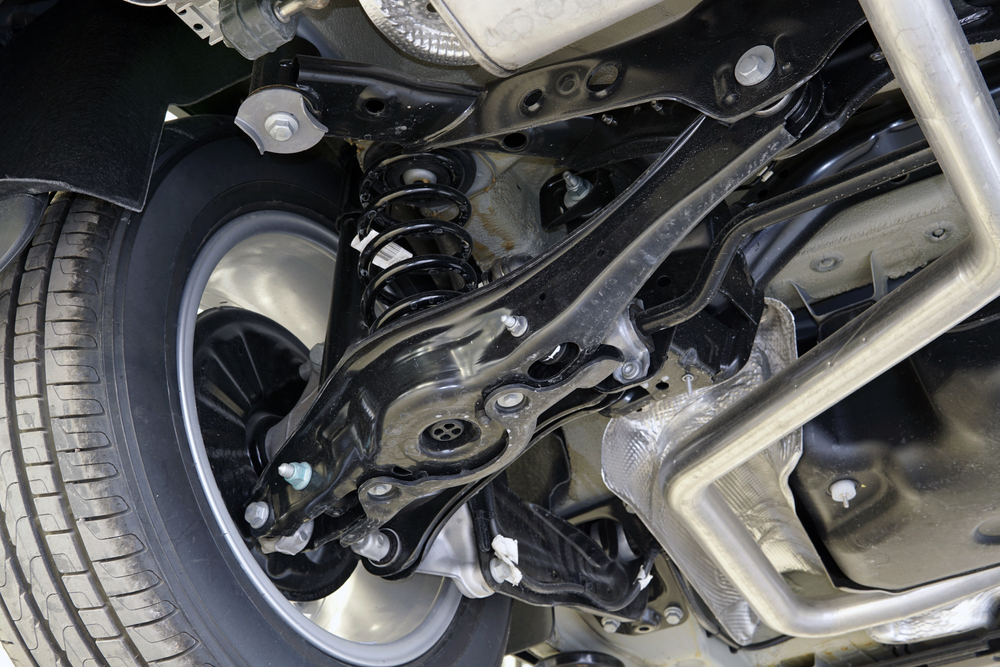
Your car’s suspension connects the wheels to the body and helps control how the vehicle responds to uneven road surfaces, keeping the cabin stable and the tyres in contact with the road. It’s made up of several components, including springs, shock absorbers, control arms, and bushings, each of which wears gradually, which means issues can develop without a sudden warning.
If you’ve been searching “How does car suspension work?”, you’ll find the answer here.
This guide explains what each suspension component does, how wear develops, and the signs worth acting on.
Whether you’ve had an MOT advisory, noticed a change in how the car feels, or want to understand your vehicle before speaking to a garage, this covers what you need to know.
The Role of Your Car’s Suspension
So, how does car suspension work? It begins with the job the system was designed for.
No road surface is truly smooth. Potholes, raised drain covers, expansion joints, and patched tarmac are a constant. Without suspension, every one of those imperfections would pass straight from the wheels into the cabin and through to you.
The suspension system occupies the space between the wheels and the vehicle’s body. It governs how the car reacts to the road surface beneath it, presses the tyres firmly to the ground, and holds the cabin settled enough for you to steer, brake, and drive with confidence.
So what does car suspension do?
Your suspension does three things, all at once:
- Road Impact Control: Each time a wheel crosses a bump, the suspension compresses to absorb and soften the force before it is transmitted through the vehicle.
- Tyre Contact: The system holds the tyres against the tarmac even when the surface beneath them is uneven, keeping braking and steering effective.
- Stability: It governs how far the car leans in corners, how much the nose drops under braking, and how much the rear sinks when you accelerate.
When all three are working as they should, your suspension stays invisible. It does its job in the background, and most drivers don’t give it a thought until something changes.
As parts begin to wear, the system’s ability to handle those three tasks diminishes, and car suspension problems and symptoms start to show. That’s when the difference becomes clear from behind the wheel.
How Springs and Shock Absorbers Work Together
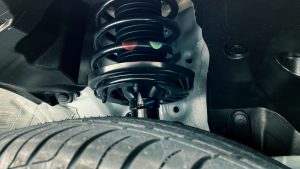
Your suspension contains multiple parts, but coil springs and shock absorbers do the lion’s share of the work. They function as a pair, and understanding what each one contributes makes the wider system easier to follow.
Coil Springs: Present on the vast majority of modern cars, coil springs compress each time a wheel meets a bump and then extend to bring the wheel back to its resting height. That compression absorbs the initial road impact before the shock absorber takes over to manage the resulting motion.
Coil springs are hard-wearing, but they don’t last forever. Over the months and years, they can lose height, develop cracks, or, in some cases… give way entirely.
A sagging spring may leave one side of the car visibly lower than the other. A cracked or fractured spring is one of several parts that can generate a knocking sound when you drive over bumps, and it’s a recognised MOT failure point.
So what keeps the car from continuing to bounce once the spring has compressed? That’s the shock absorber’s job.
Shock Absorbers: Also called dampers, they govern how the spring behaves after compression. Inside, oil is forced through a set of internal valves as the suspension cycles, and that hydraulic resistance slows the motion, preventing the car from bouncing repeatedly. When shock absorbers lose their effectiveness, the car may sway over bumps, the front can drop under braking, or driving around corners feels less stable than they used to.
On a large number of modern vehicles, both parts come packaged together.
MacPherson Struts: This design pairs the coil spring and shock absorber into one combined unit called a strut. It’s widely used on front-wheel-drive models, though the arrangement appears across a broad range of vehicles. The spring sits around the shock absorber body, and the whole assembly also serves as part of the steering and suspension geometry. Where struts are fitted, repairs are performed on the assembly as a whole.
Not every vehicle follows this layout, however.
Some models, particularly those in the premium or performance market, feature a double-wishbone or multi-link arrangement in which the spring and shock absorber are mounted in separate positions.
If you’ve noticed your car bouncing more than it used to, less composure through corners, or the front dropping when you brake, it’s worth getting the springs and shock absorbers assessed.
Our team at South Coast Garage, Eastbourne, can check these parts and let you know what needs attention.
Control Arms, Bushings, and Anti-Roll Bars
Coil springs and shock absorbers handle the vertical travel, but the suspension also needs to hold each wheel in the right position and keep its alignment true. That’s the job of control arms, bushings, and anti-roll bars.
- Control Arms: These metal components connect each wheel hub assembly to the car’s chassis or subframe. They let the wheel travel up and down over bumps while anchoring it in its correct geometric position. Once the bushings or ball joints within a control arm deteriorate, the geometry can drift, and that feeds through into how the car steers, brakes, and wears its tyres.
- Bushings: At every connection point between a control arm and the chassis or hub assembly, a rubber bushing sits between the metal surfaces. Its purpose is to absorb vibrations, reduce noise, and enable controlled flex between the moving parts. When bushings wear through, they become one of the most common sources of a knock or clunk when driving over bumps, particularly at lower speeds. You may also notice the steering feeling less sharp, or the car drifting to one side, though a pull can equally stem from tyre pressures, alignment settings, or a brake issue.
- Anti-Roll Bars and Drop Links: Running from one side of the car to the other, anti-roll bars tie the left and right suspensions together. Its role is to limit how far the body leans when you go through a corner. Short connecting pieces called drop links attach the bar to the suspension at each end.
Drop links wear on a routine cycle and are a commonly identified MOT advisory item.
A deteriorated drop link can produce a rattle or knock over uneven surfaces. If the ball joints develop excessive play or the protective dust cover has broken down enough to allow dirt into the joint, the result can be an MOT advisory or a fail, depending on the severity.
If you’re hearing a knocking sound when you drive over bumps in the road, noticing uneven tyre wear, or the car doesn’t feel as precise as it once did, control arms, bushings, or drop links could be among the causes.
Getting these assessed early is worthwhile. Call South Coast Garage, Eastbourne, on 01323 734473, and we’ll talk you through the next steps.
Air Suspension and Why It Can Fail
On some premium models, air suspension replaces the standard coil springs. Each corner of the car uses a pressurised airbag instead of a metal spring, inflating or deflating to carry the vehicle and manage its ride height. Damping is still provided by shock absorbers, as in a conventional system.
In more advanced systems, the car can adjust its height while moving, with a compressor supplying air to each airbag and electronic controls balancing pressure at all four corners in response to speed, road conditions, or driver preferences.
The most recognisable warning that air suspension is failing is a corner of the car sitting low, or the vehicle dropping on one side after being left standing overnight. This generally points toward a leak in one of the airbags or a malfunction in the valve block that directs air where it’s needed.
An airbag that’s leaking means the compressor has to cycle more often to keep pressure where it should be. Over time, that additional strain can accelerate wear on the compressor.
Air suspension is specialist territory. The systems are governed by electronic controls; the parts vary from one model to the next, and finding the source of a pressure loss requires both experience and the correct tooling.
If your vehicle has air suspension and something about how the car sits, or drives doesn’t feel right, getting it assessed by an expert is worthwhile.
What Are the Signs of Worn Suspension?
Suspension wear creeps in rather than arriving all at once. The changes accumulate over weeks and months of driving, and because you’re in the car every day, the small shifts in ride and handling slip by unnoticed as the driving experience alters.
So, what does worn suspension feel like when you’re driving? Here are the common signs of worn suspension worth keeping an eye out for:
- A Knocking or Clunking Sound: Heard when you drive over bumps, cross speed bumps, or steer at low speed. The noise can originate from a worn bushing, a deteriorated drop link, a spring that’s cracked or broken, or other parts that have worn within the suspension.
- The Car Pulling or Drifting to One Side: Without any steering input from you, the vehicle pulls to the left or right. Worn bushings or control arm joints that have shifted the wheel geometry are one explanation, although tyre pressures, alignment, and brake issues can also be responsible.
- Uneven Tread Wear: One edge wearing faster than the rest, or differences in tread depth across the axle, can suggest that suspension wear has moved the wheel angle away from its correct position.
- A Visible Drop on One Corner: If the car sits lower on one side than the other, a spring that’s sagged or snapped may be the cause. On cars with air suspension, a leak in the airbag system can produce the same lean.
- Excessive Lean Through Corners: The body rolls further than it used to when you corner, or the car doesn’t feel as stable at speed as you remember it being.
- The Front Dipping Sharply Under Braking: When the nose of the car drops more than expected as you brake, it can indicate that the suspension system isn’t controlling weight transfer effectively. Worn shock absorbers are one possible contributor.
These are some of the most common car suspension problems and their symptoms, which often overlap.
More than one part can contribute to the same sensation from behind the wheel, which is why having the full system assessed by an expert is a better approach than guessing at individual components.
If any of this sounds familiar, get in touch with South Coast Garage, Eastbourne, and we can take a look for you.
How Suspension Wear Affects Your MOT
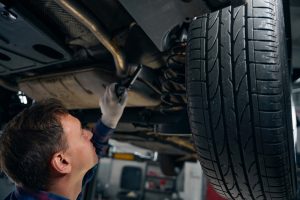
A suspension check is part of every MOT. Where deterioration has progressed to the point where it affects safety, the outcome is either an advisory or a failure.
Your car’s ball joints, springs, gaiters, bushings, drop links, and shock absorbers are the suspension components most frequently reported on MOTs. Each is checked for excessive play, damage, and deterioration, and anything beyond an acceptable limit is recorded.
An MOT is a legal requirement for all UK vehicles over three years old. It’s a one-day snapshot of your car’s roadworthiness, the legal minimum rather than a thorough vehicle health check.
So, if you’ve been wondering “how long does car suspension last” before it becomes a concern, there isn’t a set lifespan for your suspension, and regular checks around MOT time are the most effective way to keep ahead of wear that’s still developing.
If suspension advisories have appeared on previous MOTs, it’s worth having them assessed before your next test rather than waiting for them to be flagged again.
Why Expert Suspension Assessment Makes the Difference
Suspension components often produce symptoms that overlap. A knocking sound each time you drive on an uneven surface could come from a bushing, a drop link, or a fractured spring. A pull to one side might be caused by a control arm, a degraded bushing, or something else entirely.
That’s why identifying the actual culprit before any parts are ordered makes all the difference. Fit the wrong component, and the original fault stays in place, along with the cost.
A garage with the right expertise will view the suspension as a complete system rather than focusing on a single part. That means examining how each component relates to the others, tracing the wear to its true source, and explaining the findings before recommending any work.
By understanding the answer to “How does car suspension work?” and knowing what each part does and where wear develops, you’re in an informed position when you speak to a technician. You’ll know what to ask, and you’ll follow the explanation when you hear it.
Why Choose South Coast Garage, Eastbourne, for Your Suspension?
Knowing how your suspension works and where wear develops puts you in a stronger position when it’s time to have things checked. The next step is finding a garage that can inspect the entire system and carry out any necessary work to a high standard.
Suspension deterioration tends to build over time, and catching it early means many issues can be dealt with before they progress further, start affecting neighbouring components, or result in an MOT failure.
At South Coast Garage, Eastbourne, our technicians have the experience and equipment to assess your full suspension system, identify areas of wear, and carry out all repairs to a high standard.
By choosing South Coast Garage, you benefit from:
- Expert technicians working on your vehicle.
- A 12-month parts-and-labour guarantee on all repairs carried out.
- A free courtesy car while your vehicle is with us.
- A clear explanation of what’s been found before any work begins.
Join {{review-count}} local drivers across Eastbourne, Hailsham, and Brighton who’ve given us an excellent {{average-rating}} rating for accurate repairs, excellent value and honest communication.
Whether you’ve noticed a noise, had an MOT failure or advisory, or want your vehicle’s suspension system checked, call South Coast Garage, Eastbourne, on 01323 734473, and book an expert suspension inspection.
Our team will assess your car’s suspension system and let you know where things stand.
Frequently Asked Questions
How does car suspension work?
Your car’s suspension fills the gap between the wheels and the body, controlling how the vehicle handles uneven road surfaces. Coil springs compress to take the force out of bumps, and shock absorbers regulate the spring’s movement afterwards to keep the car from bouncing. Control arms and bushings hold each wheel in its correct geometric position as the suspension cycles up and down. When all these parts work as they should, the car feels planted, stable, and comfortable.
What does car suspension do?
Your car suspension bridges the gap between the wheels and the vehicle’s body, managing how the car deals with changes in the road beneath it. It presses the tyres firmly to the surface, governs how much the body moves through bends and under braking, and contributes to a comfortable, controlled ride. As parts within the system deteriorate, you may begin to notice shifts in steering feel, ride quality, or handling.
What are the signs of worn suspension?
Signs of worn suspension include a knocking or clunking sound when you pass over bumps or turn at low speed, the car drifting to one side without steering input, uneven tyre tread wear, one corner of the vehicle sitting lower than the rest, and the body leaning more than usual in bends. These changes tend to develop gradually, so it’s worth having things assessed if your car feels different to how it used to. Our team of experts at South Coast Garage can check it for you.
How long does car suspension last?
The lifespan of car suspension varies, depending on driving habits, road quality, mileage, and which specific part you’re asking about. Certain parts wear sooner than others, and the same component can have a markedly different lifespan on two different vehicles. Booking checks at regular intervals, especially close to MOT time, is the best way to catch wear before it progresses or starts affecting how the car drives.
Can worn suspension cause an MOT failure?
Yes, worn suspension can cause an MOT failure. Ball joints with excessive play, cracked or broken springs, split gaiters, worn bushings, and deteriorated drop links are all items an MOT inspection can identify, and each can result in a failure where the wear is significant. If a suspension advisory appeared on your last MOT, getting it checked before the next test is a sensible step.