Mercedes DPF Warning
There’s a component buried deep in your Mercedes diesel’s emissions system that you’ve probably never had reason to think about. It sits there doing its job trip after trip, and unless something goes wrong, you won’t know it exists. It’s called the diesel particulate filter.
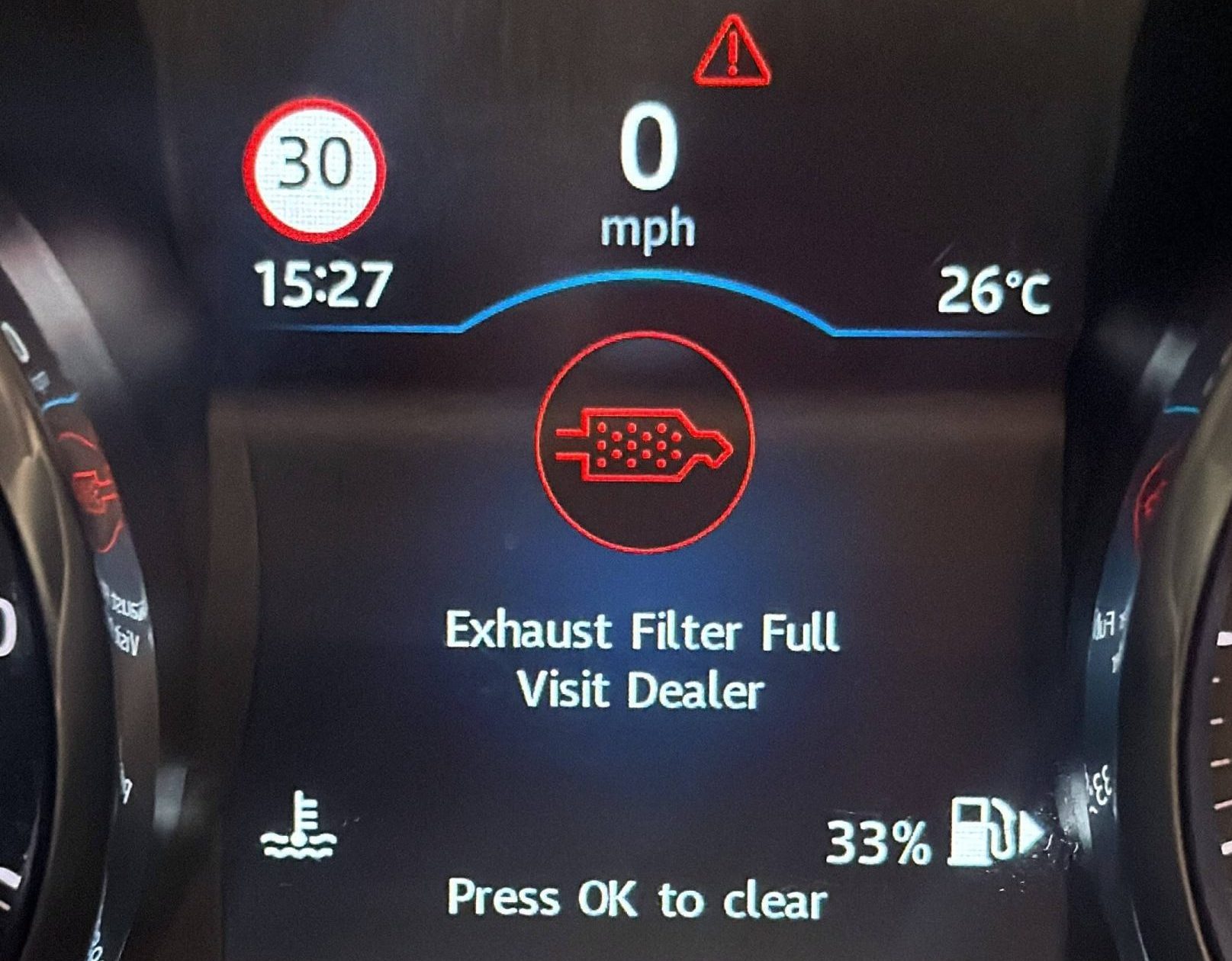
The first time you may become aware of it could be a symbol on your dashboard. No vibration. No unusual sound. No obvious change in how the car feels to drive. Just a warning where there wasn’t one before. You turn to the handbook for guidance, but still feel unsure whether you need to act.
A DPF warning isn’t one to ignore. Whatever’s behind it, leaving it tends to turn a targeted investigation into a more involved repair.
The diesel particulate filter is one of several things a Mercedes dashboard warning can point to, usually via the engine management light or a message on the display. Soot loading, an incomplete regeneration, or another fault could all be responsible. Leaving it unchecked risks reduced performance, limp mode, an MOT failure, and a heavier repair bill.
So what does the diesel particulate filter actually do, and why does the warning appear?
This guide explains how the DPF works on your Mercedes diesel, what triggers the warning, what to look out for, and what to expect when you bring your car to South Coast Garage, Eastbourne.
Inside Your Mercedes: The Diesel Particulate Filter and Soot
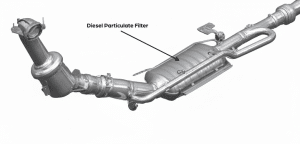
Mercedes exhaust system diagram showing the location of the DPF
Your Mercedes diesel produces fine particles during combustion, and the diesel particulate filter is there to catch them before they reach the atmosphere. It sits within the emissions system, trapping particulate matter (soot) as exhaust gases pass through.
That build-up of soot is normal. The filter isn’t designed to hold it indefinitely. Instead, your Mercedes runs an automatic process called regeneration, which raises the temperature inside the filter so the accumulated soot is oxidised and reduced, at intervals that depend on how you drive.
So what does this mean in practice? When regeneration runs as it should, you may not notice anything, and the system simply carries on. When it can’t complete, soot keeps building, the filter becomes more and more restricted, and eventually a warning appears on the dashboard.
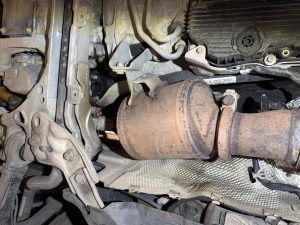
Diesel particulate filter fitted to the exhaust system underneath a Mercedes
Mercedes DPF Regeneration: Why Driving Conditions Matter
Regeneration is how your Mercedes reduces the soot that accumulates inside the diesel particulate filter. It’s the system’s way of keeping the filter working.
For Mercedes DPF regeneration to complete, the engine has to reach and hold particular operating conditions over a sustained stretch of driving, typically a consistent speed once the engine is fully warmed through. The exact conditions differ between Mercedes models and the way the car is driven.
When those conditions are sustained, exhaust temperatures climb high enough for the soot to be oxidised and reduced. In many cases, the engine management system actively raises exhaust temperature to get the process going. It all runs in the background without any input from you.
And it isn’t a one-off. Regeneration needs to repeat at intervals, how often depending on how you drive, to keep soot under control. When the car gets the right conditions, the filter keeps doing its job.
The issue starts when it doesn’t.
What Causes Your Dashboard Warning to Appear
The most frequent trigger for a DPF-related dashboard warning is a vehicle that hasn’t had the right conditions for regeneration to finish.
Short journeys, stop-start driving, and commutes where the engine can’t sustain the right conditions for long enough all keep the cycle from completing. Soot accumulates, the restriction increases, and a warning appears.
That said, driving patterns aren’t the whole story. Something wrong in the engine, elsewhere in the emissions system, or with a sensor tied to regeneration can stop the cycle finishing even when the road conditions are right. That’s why a proper investigation counts: it works out whether the problem is a missed regeneration or something else keeping the system from doing its job.
If the warning has appeared on your dashboard, getting it looked at sooner gives you more options. Call South Coast Garage on 01323 734473 and we can talk you through what to expect.
What a Mercedes DPF Warning Can and Can’t Tell You
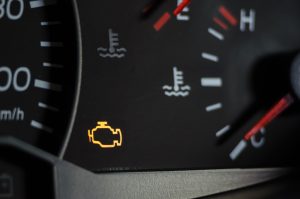
The way a DPF fault announces itself depends on the model: some show the engine management light, others a dashboard message or a filter symbol. Whatever appears, it can’t spell out the exact problem by itself.
It might be that regeneration simply hasn’t managed to run to completion. Or the reason could lie in a separate fault stopping the system operating properly. As those need different fixes, guessing serves you poorly; establishing the cause is what counts.
Take your lead from what the dashboard shows, and get the car looked at if the warning stays or reappears. Dealing with it promptly gives the best chance of tracing the cause while the work involved is still modest.
If a warning is showing and the DPF might be involved, call South Coast Garage on 01323 734473. We’ll find out what’s going on and explain the next step.
How an Unaddressed Mercedes DPF Fault Can Escalate
A DPF warning sometimes clears itself, if the car then gets the chance to complete a regeneration. But if that chance doesn’t come, or something other than driving conditions is preventing it, the soot stays put and the restriction can build. That’s the risk in simply ignoring it: you don’t know from the dashboard which of those you’re dealing with.
You may start to notice the effects. The engine works harder to push exhaust gases through the restricted filter, which can show up as reduced performance, changes in fuel consumption, or rough running.
If the restriction reaches a critical point, the car can enter limp mode. This is a protective strategy the engine management system uses, deliberately holding back power to prevent further damage. With a Mercedes DPF blocked to that degree, the car can feel noticeably down on power, and holding normal road speeds may not be possible.
The MOT is worth considering too. For any diesel first used on or after 1 July 2008, an engine management light that’s illuminated at the test is itself a fail. And a restricted or damaged filter that pushes emissions past the permitted limits can fail it as well.
If the warning has been showing for some time, it needs assessment before the situation progresses further. Speak to the team at South Coast Garage on 01323 734473 and we’ll let you know how things look.
What Happens When You Bring Your Mercedes to South Coast Garage
The first thing our technicians want to understand is your experience of the fault. When did the warning appear? How has the car been behaving? What does your day-to-day driving look like? That conversation builds a picture that shapes the direction of the investigation.
With that context, our technicians carry out a detailed technical evaluation using manufacturer-level software. This accesses data that goes well beyond what a fault code provides, giving a clear view of what’s happening within the emissions system and why the filter hasn’t been regenerating.
Think about it this way. A fault code tells you something is wrong. The detailed data our technicians access tells them what caused it, how far the problem has progressed, and what it’ll take to address it.
The objective is to understand the root cause, deal with it, and give you confidence the issue won’t come straight back. Once the cause is clear, we’ll walk you through what we’ve found and what’s needed, and take any questions before we begin. Every vehicle’s situation is different, and the approach depends on what the data reveals.
The Difference Between a Fault Code and a Full Mercedes DPF Investigation
A generic code reader can flag that the DPF system has a fault. It stops there. It can’t tell you why regeneration isn’t completing, what’s preventing it, or how far the restriction has progressed.
Our technicians use manufacturer-level software that reaches the detailed, Mercedes-specific data your car records: DPF-related values, sensor readings, and operating data a generic tool never sees. That depth is what lets them build a full picture of the fault rather than just confirm one exists.
The difference is between data and judgment. The data is one-half; experience is the other. A code pointing to excessive soot can have several possible causes, and identifying the right one takes a technician who knows your Mercedes well enough to read what the data shows and work through the possibilities to the right answer.
At South Coast Garage, Eastbourne, our technicians work with Mercedes diesels routinely. Whether it’s a Mercedes C-Class DPF fault or a warning on an E-Class or GLC, they have the manufacturer-level software and the hands-on experience to reach the right conclusion. If the warning is causing concern, get in touch on 01323 734473 and we’ll take it from there.
Your Mercedes DPF Warning: Why South Coast Garage, Eastbourne?
Whether a restricted filter can be recovered or needs replacing depends on how thoroughly the fault is investigated from the start. Choosing a garage with the right expertise and equipment for the job matters.
At South Coast Garage, Eastbourne, our technicians have the experience and equipment to identify what’s behind a DPF issue and carry out the repair to the right standard. We work on Mercedes diesel models as part of our daily workload.
When you bring your Mercedes to us, you can expect:
- A detailed technical evaluation using manufacturer-level software, not a generic code reader
- Technicians with hands-on Mercedes diesel experience
- A free courtesy car while your vehicle is with us
- A 12-month parts and labour guarantee on all work carried out
{{review-count}} Eastbourne customers have rated us {{average-rating}} on Google, with many pointing to our thoroughness and the clarity of our communication.
If you have a warning on your instrument cluster, contact us on 01323 734473. We’ll talk you through what’s involved and book your vehicle in for a full technical evaluation.
Call Now 01323 734473Save on Mercedes Servicing
Mercedes DPF: Frequently Asked Questions
Should I carry on driving with a warning showing on my Mercedes?
It comes down to what the car is signalling. Plenty of things can set off a warning, so by itself it doesn’t confirm the DPF is at fault. Do as the dashboard instructs, and have the car checked if the warning won’t clear or keeps coming back. If it tells you to stop or seek help, follow that and phone South Coast Garage on 01323 734473 for advice.
Are some Mercedes models more prone to DPF faults than others?
Any Mercedes diesel that has a particulate filter can develop a DPF fault. We see them reported most on the C-Class, E-Class and GLC, and a Mercedes C-Class DPF fault is one of the more common, but other diesel models are far from immune. Every one of these filters does the same fundamental job, but the surrounding system, and the faults it develops, aren’t the same from model to model. South Coast Garage can assess any of them. Call us on 01323 734473.
What actually happens during a Mercedes DPF regeneration?
It’s how the car deals with the soot collected in the diesel particulate filter: exhaust heat is raised until that soot oxidises and is reduced. The engine needs to hold the right running conditions over a sustained stretch for the cycle to finish. If your everyday driving doesn’t create them, soot gathers, the restriction grows, and a warning shows on the dashboard.
Could a DPF problem cause my Mercedes to fail its MOT?
It can. An engine management light showing during the MOT is enough on its own to fail any diesel first used on or after 1 July 2008. Separately, if a blocked DPF drives your emissions above the allowed figures, that’s another route to a fail. Best to have it checked before your test is due. Ring South Coast Garage on 01323 734473.